


In the past, people often heard, "Allergies are for life! At most, you can control them temporarily, but you can't cure them!" However, in Dr. L's experience,Allergies can be cured.In addition to finding the right intervention method, the fundamental solution lies in understanding the disease in the right way.
Like many diseases, we need to clearly understandAllergies are the result of a combination of factors, or they can be an intermediate process before a disease worsens.Therefore, understanding which risk factors might make allergies more likely or more severe is a very important topic. This time, Dr. L will guide you through understanding:What types of jobs are more likely to trigger allergies??
References published in a prestigious international journal in 2022. Contact Dermatitis ofpaperThe research team conducted a systematic review of the literature on occupational contact dermatitis, titled "Work-related and personal risk factors for occupational contact dermatitis: A systematic review of the literature with meta-analysis," using Medline and Embase databases. The review included 29 studies with a total of 846,209 participants and explored 52 factors. Contact dermatitisThis paper examines the risk factors for contact dermatitis (CD) to understand its work-related and individual risk factors. Contact dermatitis is a crucial topic in discussions of skin allergies. The following are the key findings of this research paper:
1. There is a significant correlation between atopic dermatitis and irritant contact dermatitis.(OR: 2.44, 95%CI: 1.89–3.15). (Level of evidence: High)
2. 【Working in damp conditions】A significant association was found between wet work and irritant contact dermatitis (OR: 1.56, 95%CI: 1.21–2.01). (Level of evidence: Moderate)
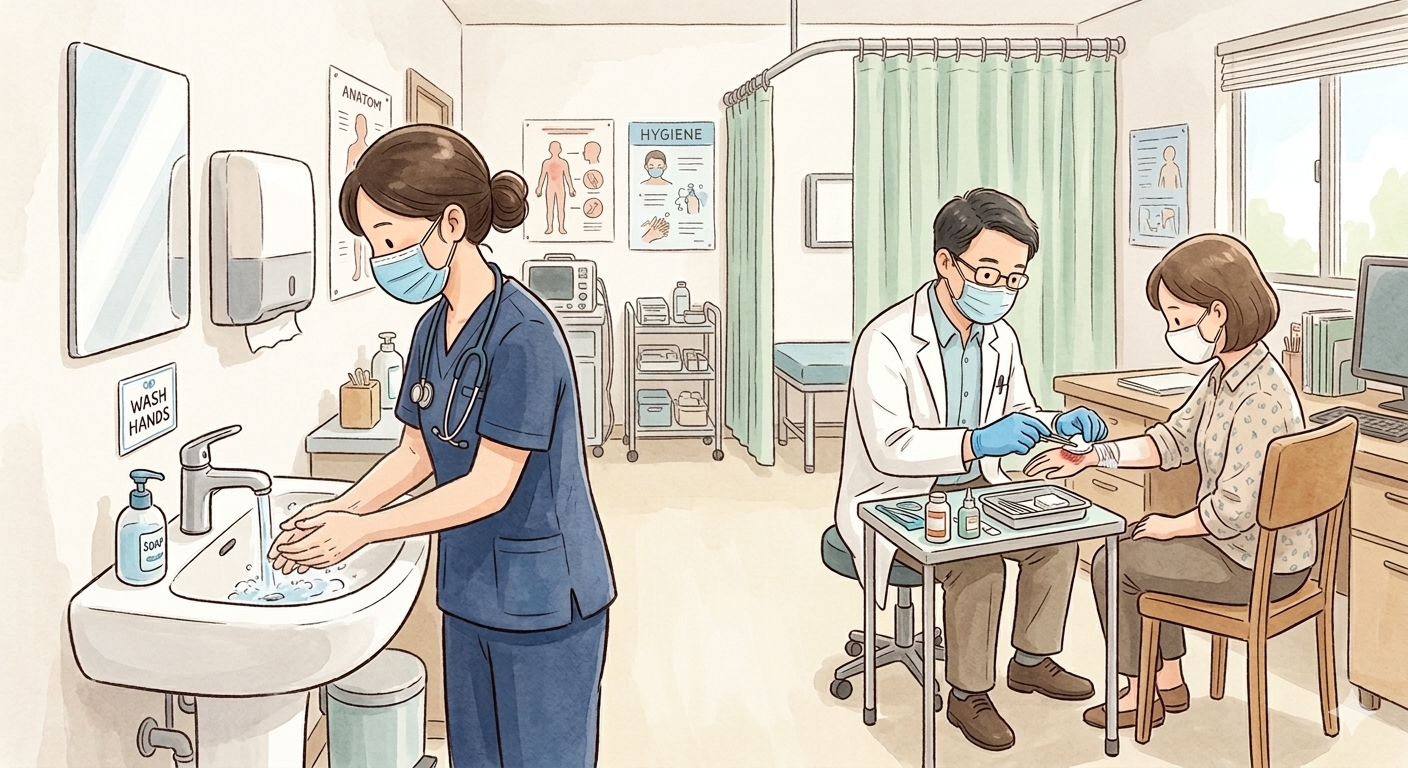
3. Occupations with a higher risk of developing contact dermatitis:
– Metalworkers (OR/RR/HR: 1.1–30.2; 95%CI: 1.0–482.9)
– Painter (OR/HR: 1.3–13.6; 95%CI: 1.1–19.5)
– Cleaner (OR: 2.0–11.4; 95%CI: 1.2–45.9)
– Healthcare workers (OR: 2.0–7.8; 95%CI: 1.2–38.7)
– Hairdresser (OR/RR/HR: 1.5–9.2; 95%CI: 1.0–11.9)
– Blue-collar workers (OR/RR: 1.9–2.0; 95%BI: 1.1–3.6)
*Note: The definition of "wet work" is usually "working with wet hands for ≥2 hours, washing hands ≥20 times, or wearing non-breathable gloves for ≥2 hours per workday" as the standard, but there are still differences in the actual definition.
The above research shows that,Certain workers or types of work have a higher risk of developing skin allergies than others, but the underlying triggering factors vary (they may be caused by humidity, volatile organic compounds, special chemicals, metal dust, etc.).Furthermore, allergies are not limited to skin allergies. For other types of allergies, the occupational risk factors are different. This is why professional clinicians are needed to assist patients in analyzing and comprehensively evaluating each type of allergy in order to cure it most effectively.
▌About the author: Dr. Lai Kunhui
Former attending physician at National Taiwan University, Master of Public Health at National Taiwan University
[A Holistic and Highly Effective Treatment for Allergies] Inventor
[Invention] Patent Certificate No.: I890654